A Private Life That Still Shapes the Public Eye
I find Vijeta Pendharkar interesting for a reason that is easy to miss in celebrity culture. She is not built from noise. She is built from continuity. In a world that often rewards the loudest version of a story, her life seems to move like water under stone, steady enough to shape the edges without drawing attention to itself.
That is part of why her story deserves more than a simple profile. The familiar facts are only the doorway: a medical background, a long marriage, two sons, and a low public profile. What sits behind that doorway is more revealing. Vijeta Pendharkar represents a kind of Indian womanhood that rarely gets proper space in public narrative. She is educated, professionally trained, and visibly rooted in family, yet she has chosen restraint over spectacle. That choice itself says something.
I see her not as a supporting character, but as a force that changes the architecture of a household. Families with public lives often look polished from the outside, but what holds them together is usually invisible. Someone keeps the rhythm. Someone absorbs pressure. Someone makes sure that life remains livable while the spotlight keeps turning elsewhere. In her case, that role appears to have been filled with intelligence and calm.
From Medicine to Meaning
A medical career is never just a job. It is a way of learning how fragile people are and how much discipline care requires. Vijeta Pendharkar trained in medicine and surgery, which already tells me a great deal. Surgery is not a soft profession. It demands precision, long hours, and a tolerance for responsibility that most people never have to imagine.
What stands out to me is that her professional identity did not vanish when family life became more prominent. It changed shape. That is different from disappearance. A person can step back from full-time practice and still remain shaped by the values that training creates. Medicine teaches a certain style of attention. It sharpens the eye. It makes one notice small symptoms before they become large problems. That kind of attention often carries over into home life, where the symptoms are emotional rather than clinical.
I think this is one of the most overlooked parts of Vijeta Pendharkar’s story. Even when she is described mainly as Rahul Dravid’s spouse, the medical foundation remains important. It gives her profile structure. It adds weight to her decisions. It also makes her later involvement in women’s health more than a ceremonial appearance. It reads like a continuation of purpose.
The Household as a Second Institution
There is a temptation to treat family life as the soft edge of a public career, but I do not think that is accurate. A household can be an institution in its own right. It has routines, crises, budgets, emotional labor, and long-term planning. When one partner lives in public view, the other often becomes the hidden manager of stability. That is not a minor role. It is central.
In Vijeta Pendharkar’s case, the family was built during years when Rahul Dravid was at the center of cricketing attention. That would have meant travel, uncertainty, interrupted schedules, media pressure, and the peculiar kind of loneliness that arrives even in a crowded life. The response she seems to have chosen was not withdrawal, but grounding. That distinction matters to me. Grounding is active. It is not passivity. It is the work of holding the center while the perimeter keeps moving.
Marriage, in such a context, becomes less like a storybook event and more like a long negotiation with reality. It requires flexibility without surrender. It requires privacy without secrecy. It requires the ability to let one person stand in the public square while the other tends the root system. Vijeta Pendharkar’s life suggests an aptitude for exactly that.
Motherhood in the Shadow of Competition
The sons, Samit and Anvay, add another layer to her story. Cricket can become hereditary in a family like this, but I do not mean that in a simplistic way. A child with a famous parent does not merely inherit a sport. He inherits expectations, comparisons, and a stage that is already half-built before he takes a first step onto it.
That makes motherhood in this setting especially demanding. It is not just about care. It is about balance. It is about protecting a child from becoming only a reflection of someone else. Vijeta Pendharkar seems to have handled that balance with quiet discipline. One son entering age-group cricket brings its own excitement. Another moving forward in school and sport adds its own rhythm. A parent in that position has to be both shield and lighthouse. Close enough to protect. Distant enough to let the child navigate.
I also think family support becomes more visible in a sports household because sport exaggerates time. Young athletes are always becoming. Their lives are measured in tournaments, selections, setbacks, and recoveries. In such a setting, a parent who remains consistent is worth more than applause. Consistency is the hidden currency. It is what lets talent breathe.
Women’s Health and Public Presence
The most interesting newer dimension of Vijeta Pendharkar’s public life is her connection to women’s healthcare. That matters because it adds a thread that is larger than family identity. It returns her to medicine in a way that feels both practical and symbolic. A woman who once trained for surgery and later engaged with a women’s clinic is not stepping into publicity for decoration. She is entering a field where her earlier knowledge can still do useful work.
I find that meaningful because it breaks a common pattern. Too often, women connected to famous men are flattened into family roles alone. Their education is reduced to a footnote. Their former work becomes a memory. Vijeta Pendharkar resists that flattening. Even if her public appearances are limited, they remind me that expertise does not expire just because it is not performed daily in front of an audience.
Privacy also becomes its own kind of statement here. She does not seem interested in building a personal brand out of proximity. That choice gives her a different sort of credibility. In an age where visibility is often mistaken for value, she stands as evidence that a person can remain meaningful without becoming constantly accessible.
The Texture of Wealth, Status, and Simplicity
People often ask about net worth because numbers feel like a shortcut to understanding. I think that shortcut is usually misleading. With Vijeta Pendharkar, a precise financial portrait is not really the story. The more revealing point is the style of life around her. It seems measured, not flashy. Comfortable, perhaps, but not ostentatious. Stable, but not obsessed with display.
That tone matters. A family can have substantial resources and still live with restraint. In fact, restraint often protects resources from becoming performance. It also protects relationships from being judged only through public success. What I see in Vijeta Pendharkar’s case is a household that appears to value usefulness over theater. That is rare enough to note.
Wealth, in such a setting, becomes less like a crown and more like a foundation. It supports the structure, but it is not the structure itself. The structure is made of habits, commitments, and private loyalties. That is where her influence seems to live.
Why Her Story Endures
I return again and again to the same image. Vijeta Pendharkar is like the keel of a ship. You do not notice it first. It does not catch the sunlight. It does not announce itself at the harbor. But it is the part that keeps the vessel from drifting sideways when the water gets rough. That is not a decorative role. It is an essential one.
Her story holds because it resists easy summary. She is educated but private. Professional but not performative. A spouse, yes, but not only a spouse. A mother, yes, but not reduced to motherhood. A medical woman whose work, even when less visible, still seems to pulse underneath the surface of family life. I see in her an older, steadier idea of influence, one that does not need applause to be real.
FAQ
Who is Vijeta Pendharkar?
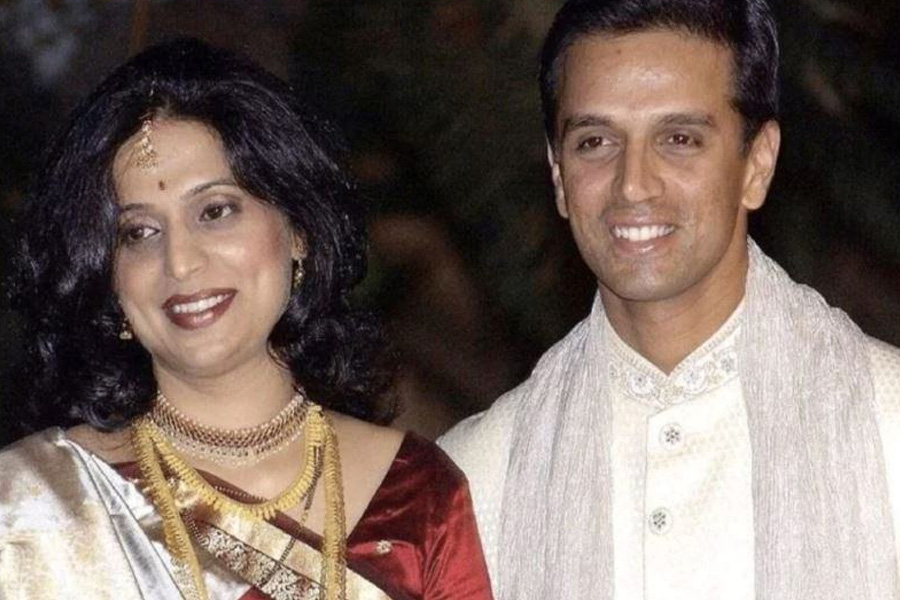
Vijeta Pendharkar is an Indian medical professional best known to the public as Rahul Dravid’s wife, though that label only captures part of her identity. She has a background in medicine and surgery, and her life has combined professional training with a deeply private family role.
What makes Vijeta Pendharkar different from many other public figures?
What stands out to me is her refusal to turn visibility into a lifestyle. She appears to value discretion, family stability, and practical purpose over public branding. That gives her story a quieter but more durable shape.
Did Vijeta Pendharkar stop working after marriage?
Her professional path appears to have shifted after marriage and motherhood, but that does not mean her medical identity disappeared. She seems to have moved from full-time practice into a more selective and family-centered rhythm while still staying connected to healthcare.
How is Vijeta Pendharkar connected to women’s health?
She has been linked with women’s healthcare initiatives in Bengaluru, including public-facing involvement with a women’s clinic. That connection matters because it shows her professional background continuing in a meaningful, community-oriented way.
What is known about Vijeta Pendharkar’s children?
She has two sons, Samit and Anvay. Their growing involvement in cricket has brought the family occasional public attention, especially as both boys have taken steps in age-group cricket and related sporting milestones.
Why do people remain interested in Vijeta Pendharkar?
People remain interested because she represents a kind of life that is both visible and hidden. She is part of a famous cricket family, yet she has never allowed fame to define her completely. That contrast makes her compelling.
Does Vijeta Pendharkar use social media publicly?
She does not appear to maintain a highly active public social media presence. That absence adds to her sense of privacy and helps explain why most mentions of her come through family events, health-related appearances, or cricket-related updates.