The man behind the brighter names
I have always found that some lives move like background music. They shape a scene without demanding the camera. Luigi Borghese was one of those figures. He belonged to the hard-working edge of Italian entertainment, where deals are made, credits are built, and reputations are carried less by spotlight than by gravity. His name is often remembered through family, especially through his son Alessandro, yet that narrow label misses the texture of the man himself. He was a producer, an entrepreneur, an occasional actor, and a presence in a world that rewarded motion, taste, and timing.
What interests me most is that Luigi Borghese seems to have lived at the seam between public life and private discipline. That seam is rarely glamorous. It is more like the stitching inside a tailored jacket, hidden but essential. A life like his is built not from grand speeches, but from practical decisions, repeated over years until they become character. In the Italian film landscape of the postwar decades, that kind of figure mattered. The industry did not run only on stars. It also ran on organizers, connectors, and people who knew how to keep things moving when the lights were off.
A career shaped by industry rather than spectacle
Luigi Borghese worked in film production during a period when Italian cinema was still a living ecosystem of studios, sets, distributors, and personalities. The era produced comedies, thrillers, genre films, and crowd-pleasers that traveled widely. In that environment, a producer was part architect, part negotiator, and part gambler. One had to balance taste with economics, ambition with reality. I imagine it as standing at a crossroads where every road looks promising and expensive.
He also ventured into entrepreneurship beyond cinema. That detail matters because it suggests a mind that did not stay inside one frame. Some people specialize in one lane and never leave it. Others treat careers like ports, arriving, unloading, and sailing again. Luigi Borghese appears to have belonged to the second type. That kind of flexibility often leaves only faint traces in the public record, yet it reveals a great deal about temperament. It hints at a man who understood risk, timing, and practical survival.
His occasional appearances on screen add another layer. They were not enough to make him a celebrity in the usual sense, but they show proximity to the machinery of performance. I read that as a sign of comfort around sets and cameras, even if his deeper role was behind them. Some people are made for the frame. Others are made for the frame behind the frame.
The family story that outlived the film credits
If Luigi Borghese’s professional life was steady but understated, his family life became the part most people remember. That is not unusual. Families often outlast careers in public memory, especially when the children become visible in their own right. Alessandro Borghese brought the family name into another arena entirely, turning it into a familiar presence in kitchens, restaurants, and television studios. The shift is striking. One generation worked in the grammar of cinema, and the next spoke fluently in the language of food and performance.
That transition tells me something important about Luigi Borghese’s legacy. A parent does not control how a child will be remembered, but a parent can shape the emotional architecture from which that child rises. Alessandro has often come across as someone with a strong sense of identity, and that kind of confidence usually has roots. In this case, the roots seem to run through a household where ambition and discipline were both present, even if not always easy.
The family also included Massimiliano, often called Max, whose life remained more private. And later, the next generation widened the circle with grandchildren such as Alexandra, Arizona, and Gabriel. A family tree like that is not just a list of names. It is a living archive. Branches grow in different directions, but the trunk remains visible.
Barbara Bouchet and the public pressure of intimacy
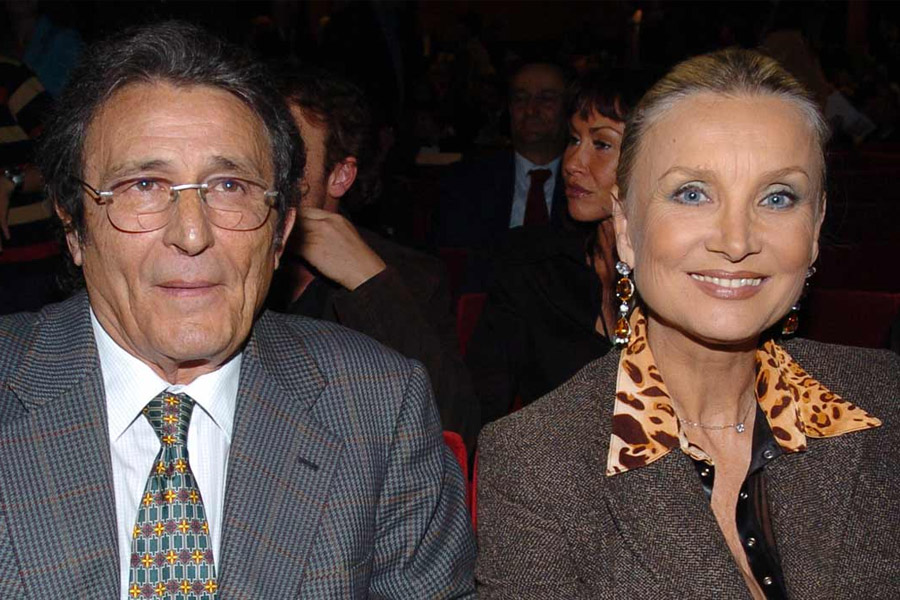
Any account of Luigi Borghese must pass through Barbara Bouchet, because public memory often braids them together. Their marriage linked two different kinds of visibility: hers, built on screen presence and celebrity, and his, rooted more in production and business. That arrangement can be elegant from the outside and complicated from the inside. There is a particular tension when one partner is far more publicly recognized than the other. The couple becomes a small stage on which fame, privacy, and expectation all collide.
Their separation, later in life, was part of the public narrative, but that should not flatten the years that came before it. Relationships are rarely one thing from beginning to end. They shift like weather. They can be warm for long stretches, then stormy, then clear again for brief moments. What stands out in this family story is that time and illness eventually made private bonds visible again. The human instinct to care for one another often appears most clearly when life becomes fragile.
I think that is one reason Luigi Borghese remains interesting. His story is not built around scandal. It is built around pressure, endurance, and family memory. That gives it a different kind of force. Not a trumpet blast, but the hum of a machine still running in the next room.
Illness, dignity, and the parts of life that do not fit headlines
Later accounts of Luigi Borghese’s life emphasize illness, treatment, and family support. His final years were marked by leukemia and by the practical tenderness that often surrounds serious illness. I have always believed that these chapters matter because they reveal who people become when glamour can no longer help them. The set lights go down. The audience has gone home. What remains is character without costume.
There is something quietly heroic in being remembered for endurance rather than spectacle. It is not the kind of heroism that gets framed on a poster, but it is real. A person in that position is often measured not by achievement alone, but by the manner in which they move through decline. That is especially true in families where public and private identities overlap. Grief becomes part of the archive. So does care.
Luigi Borghese died in January 2016, leaving behind not only a family but a web of memory that still surfaces in interviews and recollections. People do not always remember a producer by title, but they remember the shape of his influence. That is a subtler kind of survival.
Why Luigi Borghese still matters now
What I take from Luigi Borghese is not a tale of celebrity ascent. It is something more textured. He represents a type of figure that every cultural era needs and often forgets: the person who works in the interstitial spaces, the one who helps projects happen, who moves between commerce and creativity, who builds a life that is legible more through consequences than headlines.
In Italy, where family identity and public identity often intertwine with unusual intensity, that kind of legacy can be especially durable. A name survives not only in film credits, but in the way children speak, in the careers they choose, and in the stories told at family tables. Luigi Borghese seems to have left behind exactly that sort of imprint. It is not polished like a trophy. It is more like patina on bronze, the result of time and touch.
I find that compelling because it resists simplification. Luigi Borghese was not merely the husband of a celebrity or the father of a famous chef. He was a working man inside a complex media world, a family figure, and a quiet participant in the long middle of Italian cultural life. That middle is where much of history actually happens.
FAQ
Who was Luigi Borghese?
Luigi Borghese was an Italian film producer, entrepreneur, and occasional actor whose name is most often connected to his family and his work in Italian entertainment. I think of him as one of those people whose influence is easier to feel than to summarize.
What was Luigi Borghese known for?
He was known for working in film production and for being part of the family that includes chef and television personality Alessandro Borghese. His public identity was shaped as much by family memory as by professional credits.
Was Luigi Borghese only involved in cinema?
No. Alongside film-related work, he also pursued entrepreneurial activity. That detail adds depth to his story, because it suggests a broader business life rather than a single career lane.
Who was Luigi Borghese married to?
He was married to Barbara Bouchet, the actress and public figure. Their relationship became part of the public story around his life, especially because their family remained in the spotlight through their children.
Did Luigi Borghese have children?
Yes. He had at least two sons, Alessandro Borghese and Massimiliano, often called Max. Alessandro became the more visible public figure, especially through cooking and television.
What happened in Luigi Borghese’s later years?
His later years were marked by illness and family care. Accounts of that period describe a difficult time shaped by leukemia and by the support of his family around him.
Why is Luigi Borghese still remembered?
He is remembered because his life connected several worlds at once: film, business, family, and public memory. His name continues to appear not only in biographical references, but also in the stories told by the people closest to him.